3 min read
Sometimes commissions come not from logic but from feeling. That is how the story of the “Yoni — Seashell” mirror began: not as a project but as an inner response.
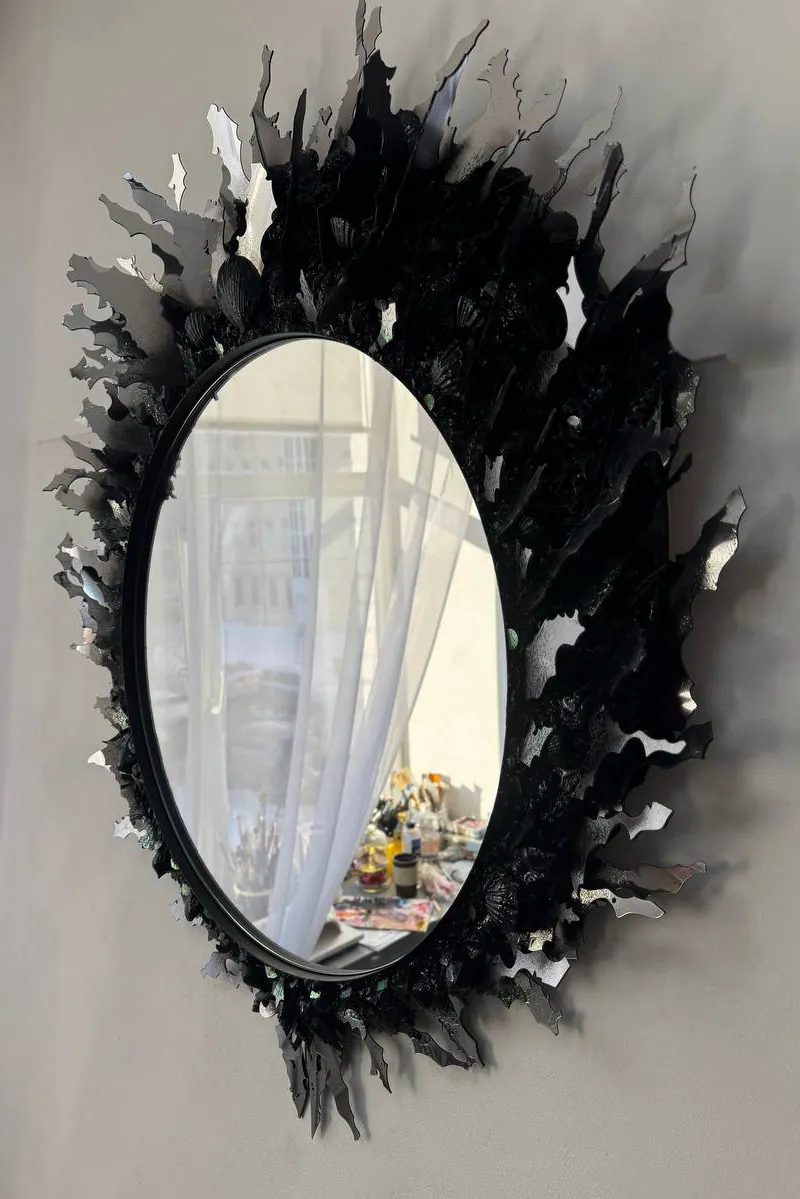
One day a woman saw the art object. She was not planning to redo her interior, was not looking for a mirror and had no idea how it might fit into her space. She simply felt it. “I want this in my home,” she said. A sentence not about design but about recognition.
The moment of meeting
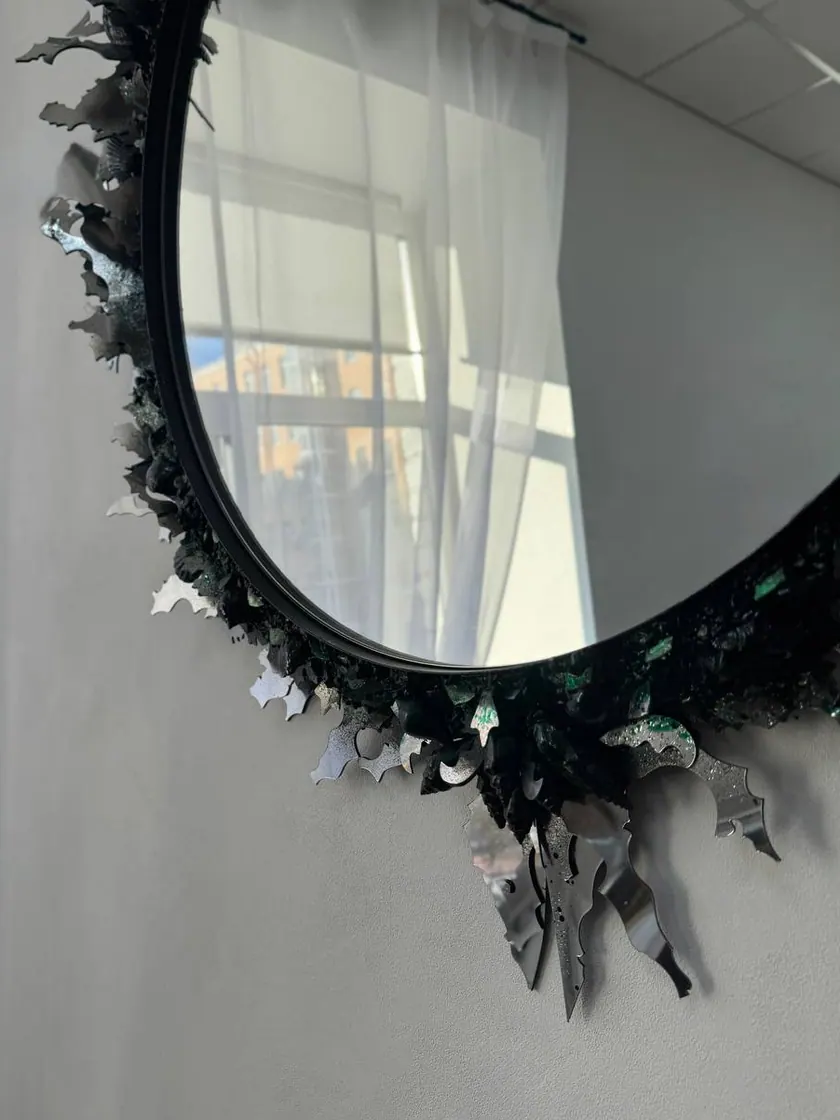
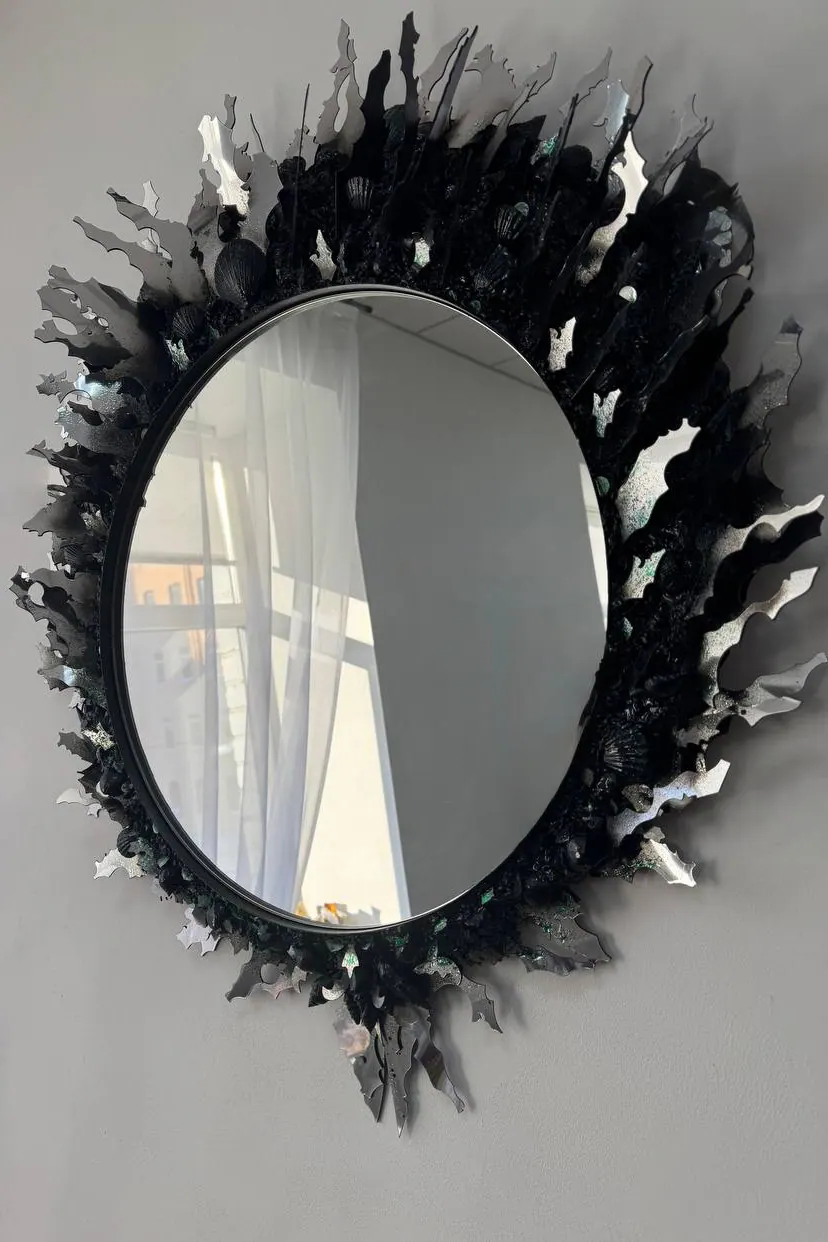
The art object “Yoni — Seashell” does not pull you in at once; it works deeper. You cannot take it in superficially: soft organic forms, mirror fragments, real seashells with their ancient memory — all of it makes you feel you are facing not an object but a living state.
The woman looked for a long time. In the reflections, besides herself, there was a strange sense of calm. The warmth of hands in the texture, and in the form a feeling of beginning, of source, of inner strength.
“Could this be made into a mirror?” she asked. And so the art object began its continuation.
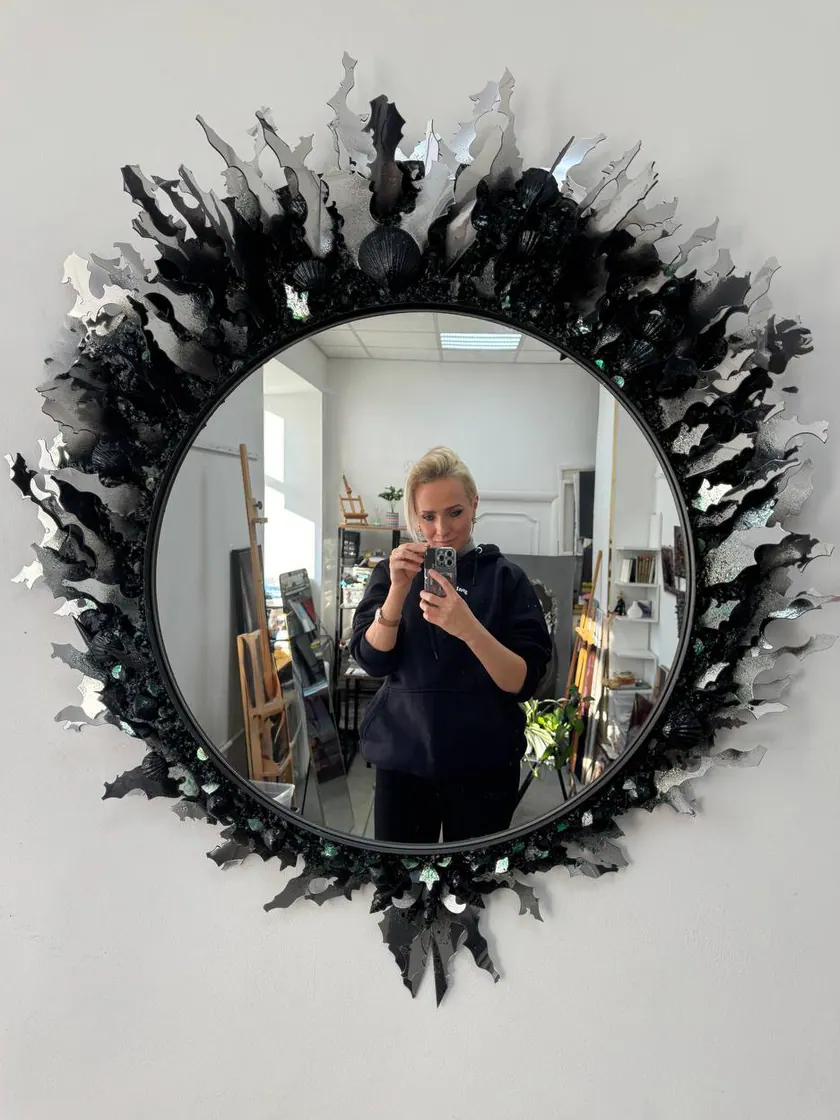
Why the bathroom
The bathroom is one of the most intimate spaces in a home. A place where a person is left without roles, masks or other people’s eyes. There we meet ourselves as we really are: in the morning, in the evening, in the quiet of water and reflections.
The woman wanted the mirror in her bathroom to be more than functional. “It matters to me that it is alive,” was how she put it. Her words carried a wish less for beauty than for meaning. She wanted a mirror that would give support instead of judgement.
And then it was clear: “Yoni — Seashell” had to appear exactly there.
The mirror as a personal ritual
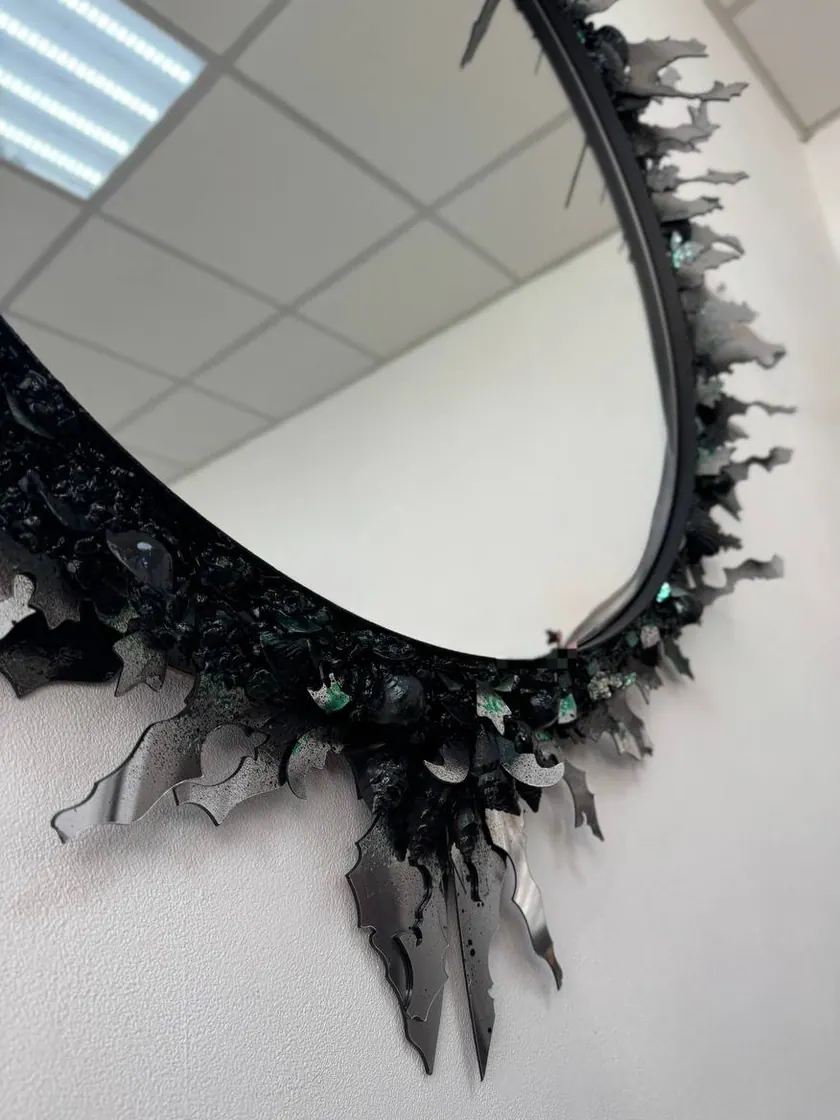
Working on the mirror turned into a delicate dialogue.
Every line of the form was built not only by the laws of composition but by feel. In this object the Yoni stopped being a symbol out of cultural treatises and became a space of inner calm.
The shells were not chosen at random. Polished and matt, with different textures and shades, they seemed to gather up different states of water — from storm to stillness. The mirrored surfaces broke the light so that the reflection stopped being flat. Depth appeared in it: as if a space for breathing had opened between a person and their image.
Making the mirror became the making of a personal ritual, of an object that becomes part of a person.
When the mirror was finished, it changed the bathroom more than anyone expected. The room seemed to grow quieter, the light softer, the reflection more honest.
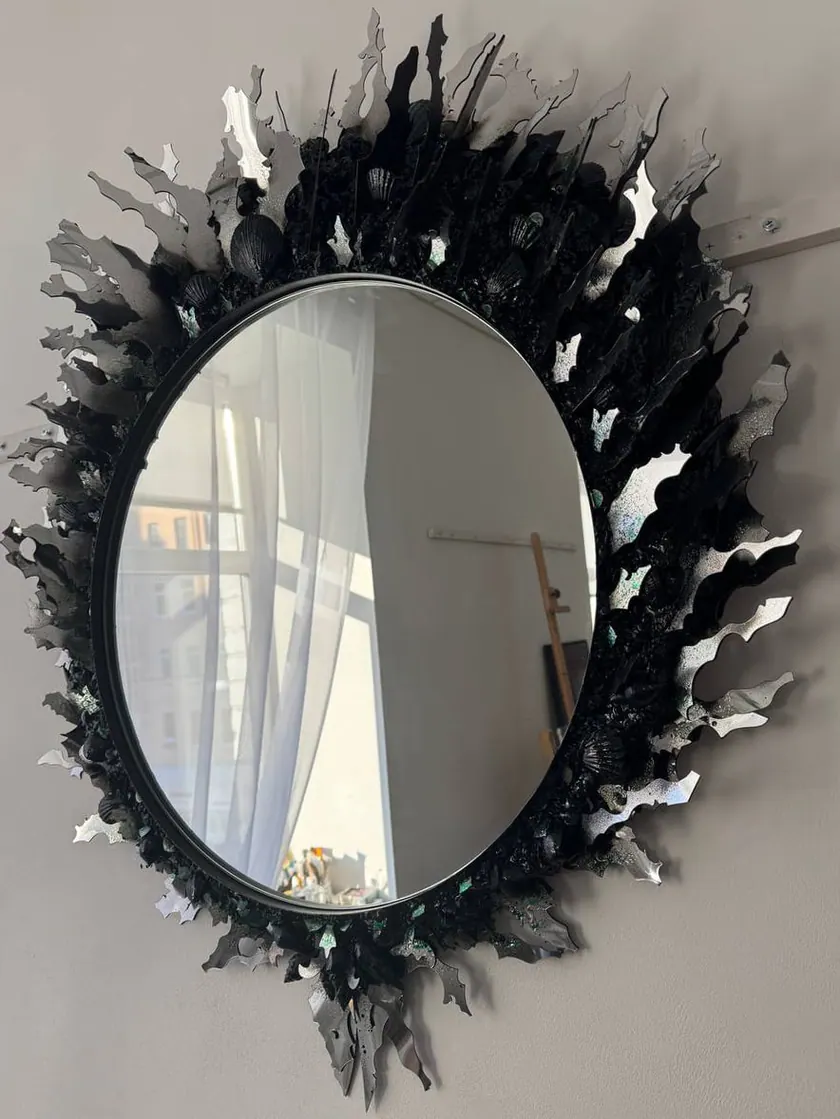
The owner of the house said that she now looks in the mirror differently in the morning. Not to assess herself but to feel. “It’s as if it doesn’t judge me,” was how she described it.
That is the power of handwork. Objects like this do not impose an image; they create a space where a person can be themselves.
Yoni — Seashell as a language of interiors
In the interior, the “Yoni — Seashell” mirror became the centre of meaning.
The Yoni is the archetype of beginning, the shell a carrier of time, the mirror not vanity but a gate. Merging, they form an object that “talks” to the space.
Why mirrors like this are never chosen by accident
People who commission such objects are, as a rule, not guided by trends. They choose the state, the depth and the story held inside handmade art. Because a home you want to live in is not a shop window but a space of inner life.
That is why “Yoni — Seashell” became not just a mirror in a bathroom but a personal symbol — the point where a person meets themselves.
The quiet magic of form
Every handmade mirror holds something more than design: the trace of a hand, the memory of the material, the breathing of the form. When a person looks into a mirror like this, they see not only a reflection but a space where they can be real. And perhaps that is exactly what such objects are made for: so that an interior stops being just a backdrop and becomes an extension of the soul.
custom mirror · custom handmade mirror · round mirror · wall mirror · black mirror